
Innovative Solutions for tunnel construction

Fuel combustion from machinery, equipment, and vehicle fleets accounted for 17% of Eco-Tunnels’ carbon footprint in 2021. To address this, the company has set ambitious targets to reduce Scope 1 emissions by 40% by 2030, down to 80,000 tCO2. Key strategies include the adoption of biofuels and the electrification of equipment and vehicles, both of which aim to significantly cut reliance on traditional fossil fuels while maintaining operational efficiency.

In 2021, electricity use across our work sites, agencies, and upstream operations represented 8% of total emissions. Eco-Tunnels is committed to reducing Scope 2 emissions by 40% by 2030, aligning with its broader sustainability goals. The transition to low-carbon electricity sources is central to this effort, ensuring that energy consumption supports operational needs while minimizing environmental impact. This shift will not only reduce emissions but also strengthen resilience against future energy challenges.

The largest share of emissions (75%) comes from upstream activities such as steel and concrete manufacturing, transport, and subcontractor services. Recognizing this, Eco-Tunnels has set a 20% reduction target for Scope 3 emissions by 2030, down to 323,000 tCO2. Decarbonization levers include the use of recycled steel and improved material handling practices, both of which aim to lower embodied carbon in construction. By tackling these high-impact materials, the company advances toward more sustainable underground works while reinforcing its commitment to responsible construction.

Sustainable underground works
Sustainable tunnel design begins with value engineering to refine alignments and reduce diameters, thus cutting excavation volumes and lowering CO2 emissions. Shallow station placement further minimizes concrete use, while digital carbon analysis integrates BIM modelling with whole-life calculations to identify and address carbon hotspots. Comprehensive risk assessments ensure that local ecosystems, such as aquifers, are protected, embedding sustainability into every stage of project planning and execution.
Sustainable tunnel design begins with value engineering to refine alignments and reduce diameters, thus cutting excavation volumes and lowering CO2 emissions. Shallow station placement further minimizes concrete use, while digital carbon analysis integrates BIM modelling with whole-life calculations to identify and address carbon hotspots. Comprehensive risk assessments ensure that local ecosystems, such as aquifers, are protected, embedding sustainability into every stage of project planning and execution.
Carbon reduction continues through procurement and transport strategies that prioritize low-carbon materials, such as GGBS and ultra-low carbon concrete. Equipment is repurposed and retrofitted across projects, extending its lifecycle and reducing waste. Flexible procurement frameworks enable contractors to adopt emerging technologies during construction, ensuring that sustainability goals are met while maintaining adaptability to evolving industry standards.
Ultra low carbon segments
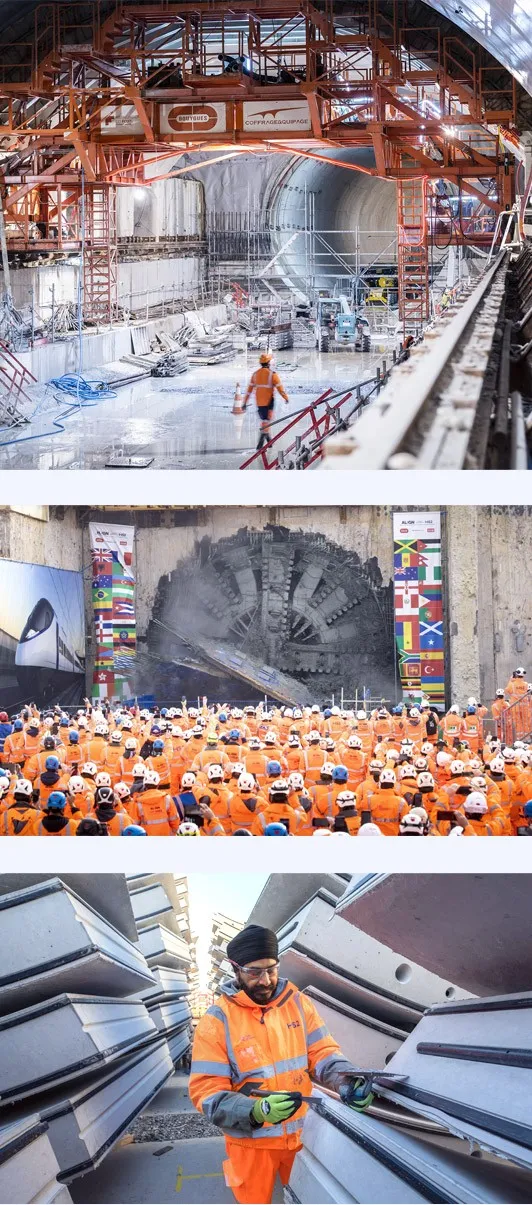
Bouygues Travaux Publics (BYTP) has established itself as a leader in sustainable tunnel construction, placing environmental responsibility and durability at the forefront. Through innovative mixture design, the company reduces carbon footprints by incorporating steel fiber reinforced concrete (SFRC) and supplementary cementitious materials (SCMs), ensuring that precast tunnel segmental linings (PCTL) meet both performance and sustainability objectives.
Projects such as the HS2 tunnel in the UK and the Pawtucket tunnel in the USA demonstrate the successful application of these eco-segments, achieving measurable reductions in carbon emissions. Building on these achievements, BYTP remains committed to advancing sustainability in tunneling, continuously refining materials and practices to deliver greener infrastructure for the future.
At BYTP, innovation is not a project milestone, but a continuous journey. From pioneering robotic solutions to advanced data-driven platforms, our teams constantly push boundaries to improve safety, efficiency, and sustainability in underground works. Every initiative reflects our commitment to transforming tunneling into a smarter, safer, and more environmentally responsible discipline.
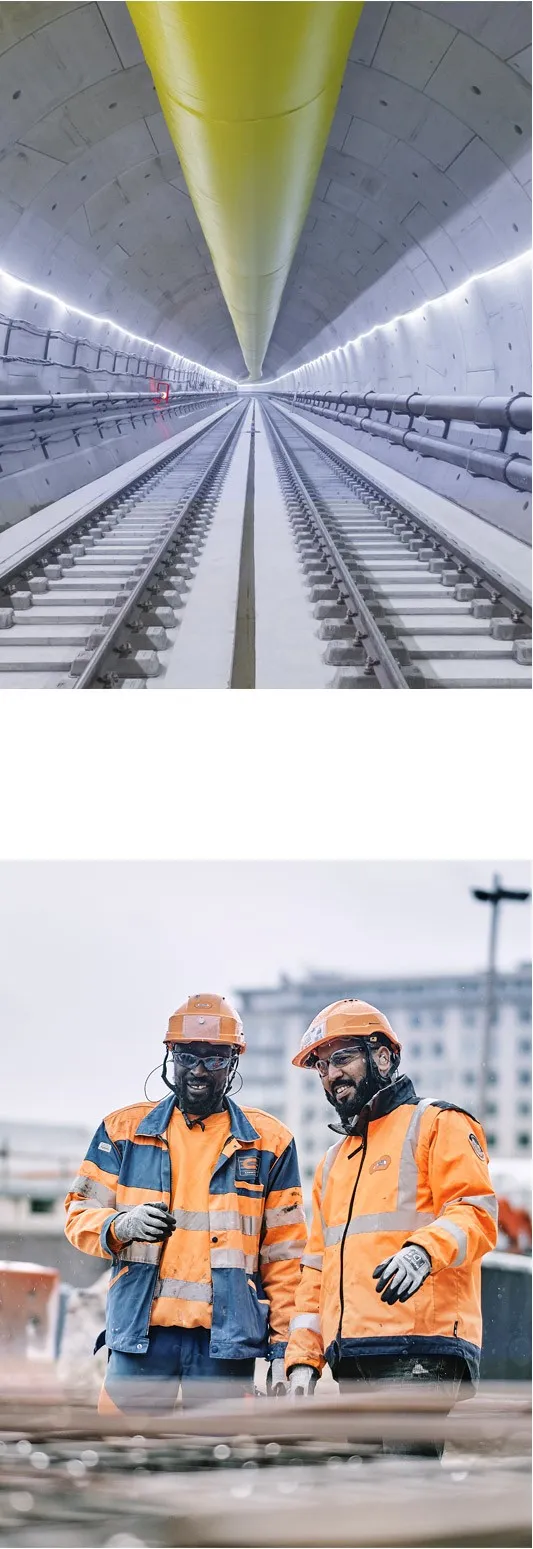
Our strength lies in the depth of our experience and the diversity of our teams. The centralized technical department brings together leading experts in mechanized and conventional excavation, while the DATA & AI team develops advanced data management systems to optimize operations. The plant department ensures reliability and standardization across projects, tailoring solutions to each unique site. Together, these teams form the backbone of our excellence in underground construction.
Innovation is embedded in our culture, shaping both commercial strategies and on-site execution. By fostering creativity and continuous improvement, we enhance the reliability of our solutions and elevate the quality of our structures. With our range of practical, pioneering tools and solutions, innovation translates directly into performance gains as well as safer, more efficient workflows.
With over 700 kilometers of tunnels constructed across five continents, Bouygues TP has proven its ability to deliver complex underground projects worldwide. From eco-segments in the HS2 tunnel in the UK to advanced robotic systems deployed in Hong Kong and Miami, our global achievements display both technical mastery and a commitment to sustainability. This international presence reinforces our role as a trusted partner in shaping resilient infrastructure across diverse environments.
Safety is our foremost objective, with a clear ambition of zero serious accident. Through comprehensive training programs, we empower staff to recognize and avoid high-risk behaviors, embedding a culture of vigilance and responsibility. We deploy preventive technologies as well as remote inspection tools to further reduce exposure to hazards, ensuring that safety is not just a standard but a daily practice.
We recognize that well-being is integral to performance. Ergonomic excellence is achieved by continuously improving workstations to reduce musculoskeletal strain and enhance comfort. Robotic systems that automate repetitive tasks, such as drilling robots and spacer handling devices, are designed to minimize physical effort, allowing teams to focus on higher-value tasks while safeguarding their health.
Bouygues TP applies the highest global safety standards across all sites, addressing the unique challenges of underground environments. From confined spaces and hyperbaric diving to fire risk and emergency response, our protocols are rigorous and comprehensive. By integrating advanced monitoring, standardized reporting tools, and coordinated workflows, we ensure that every project meets world-class safety benchmarks, protecting our teams while delivering infrastructure that endures.